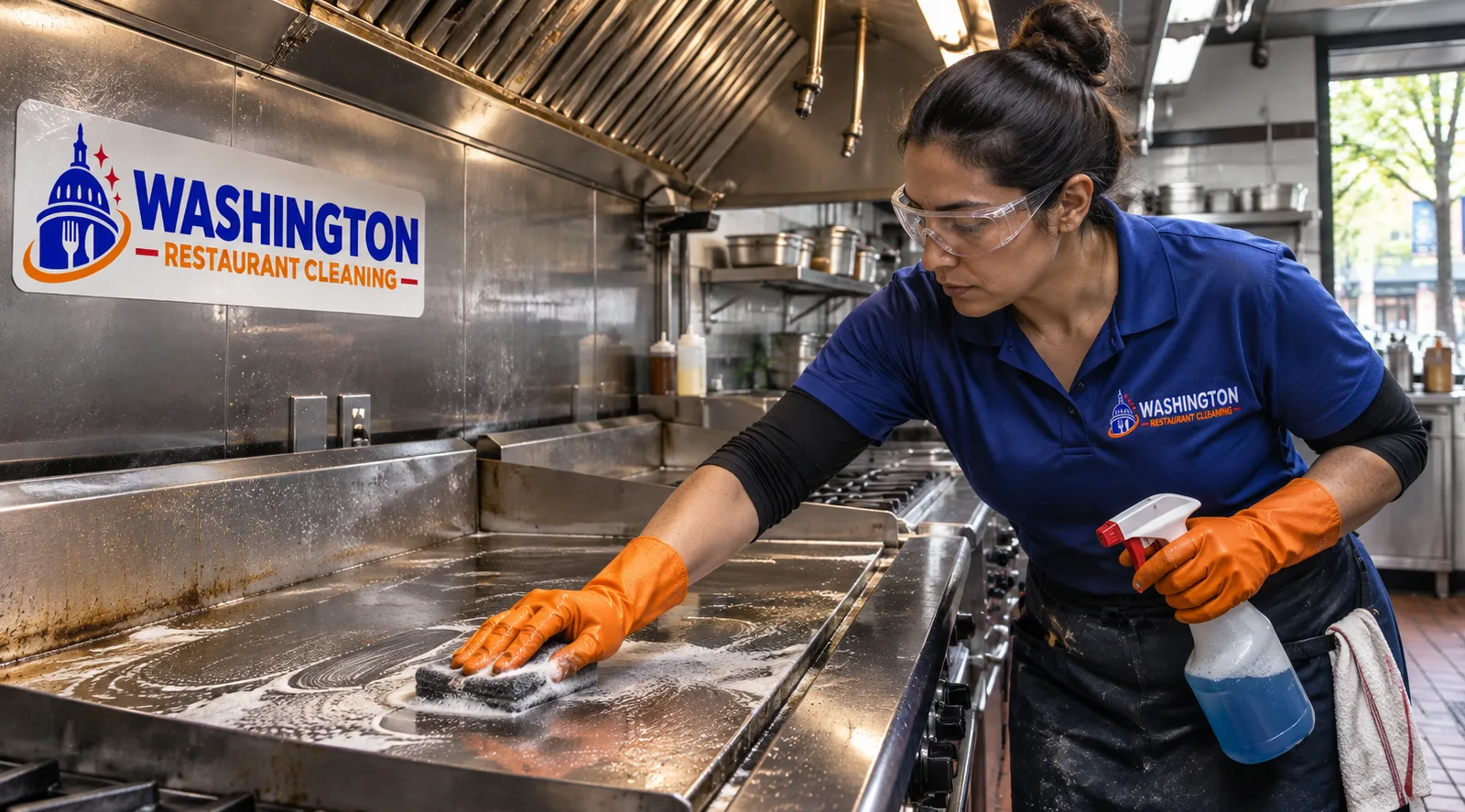
A trained cleaner degreasing stainless-steel cooking equipment in a professionally maintained Silver Spring restaurant kitchen.

Restaurant Cleaning · Silver Spring

Restaurant Cleaning Silver Spring

Detailed kitchen, dining-area, and equipment care planned around your operating hours, food-safety needs, and facility layout.

✓Kitchen care ✓Equipment detail ✓Dining areas ✓Off-hours planning

Operational cleaning

Commercial Cleaning Built Around Restaurant Operations

Restaurant Cleaning Silver Spring should address the grease, food residue, foot traffic, and tight service windows that ordinary office cleaning does not. Washington Restaurant Cleaning develops the scope around your kitchen equipment, flooring, dining room, restrooms, storage areas, and operating schedule. The goal is a clean facility that is ready when staff arrive, without disrupting prep or service.

Our work is based in Washington, DC, near the Silver Spring market. We are a restaurant company Washington homeowners rely on, applying the same practical approach to every job: inspecting the facility, identifying high-risk soil and contact points, assigning suitable cleaning methods, and documenting what the agreed scope covers. Each plan can account for nightly upkeep, periodic detail work, or a one-time reset before an inspection, reopening, or change in management.

Silver Spring restaurants range from compact storefront kitchens near the Silver Spring Transit Center to larger dining rooms and mixed-use properties along Georgia Avenue. Downtown locations may have restricted loading access and narrow service corridors, while kitchens near Four Corners or White Oak may have larger footprints and different waste-handling routes. Those conditions affect crew size, equipment placement, and the time needed to complete the work safely.
Request a Callback

Defined service scope

What Restaurant Cleaning in Silver Spring Can Cover

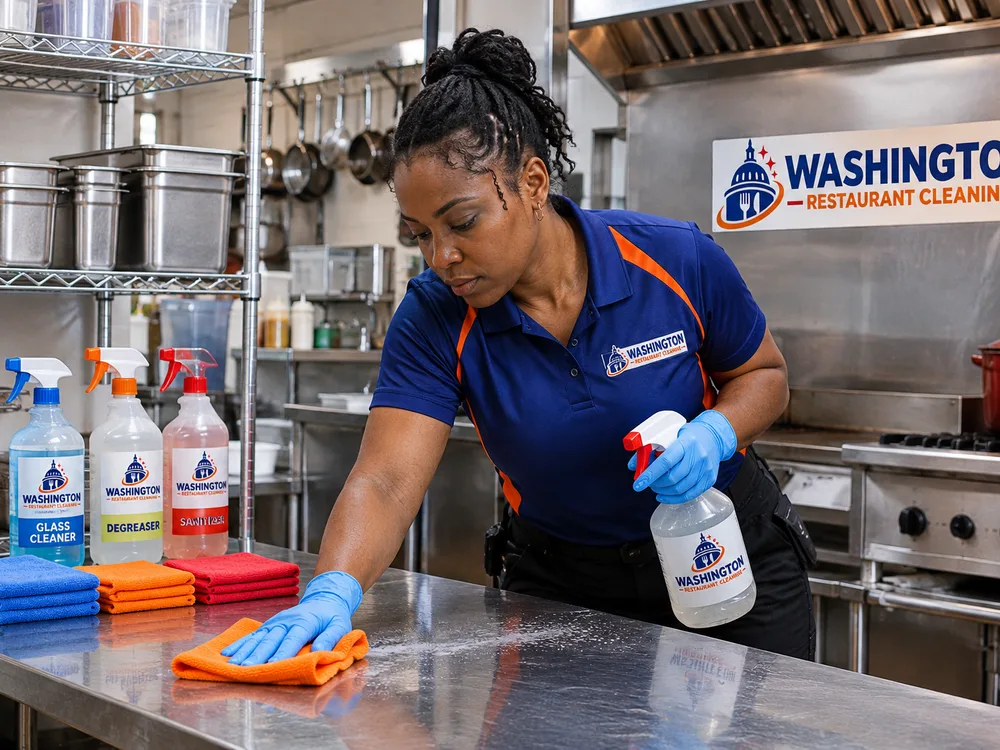
A restaurant cleaner using color-coded cloths and labeled products on prep tables, shelving, and washable kitchen surfaces.
Methods and products should match the surface, soil, and food-safety requirements.

A sound cleaning scope separates routine sanitation from periodic deep cleaning. Routine work commonly includes sweeping and degreasing floors, wiping washable surfaces, cleaning restrooms, removing interior waste, and addressing dining-room soil. Detail work reaches buildup around equipment legs, casters, baseboards, floor edges, splash zones, and other areas that are easy to miss during a rushed close.

Kitchen cleaning may cover stainless-steel exteriors, prep tables, shelving, sinks, walls, washable ceilings, doors, handles, and floor drains when included in the agreed scope. Front-of-house work can include tables, chairs, host stations, partitions, glass, entry areas, and hard floors. Cleaning products and methods are selected for the surface and soil. An alkaline degreaser may suit greasy quarry tile, while stainless steel, sealed wood, glass, and resilient flooring need different chemistry and tools.

Food-contact surfaces require special care. They must be cleaned, rinsed when the product directions require it, and sanitized with an appropriate food-contact sanitizer at the label concentration and contact time. Cleaning removes soil. Sanitizing is a separate step that reduces microorganisms after the surface is clean.

Equipment care

Restaurant Equipment Cleaning Silver Spring

Request a Callback
✓

Cooking Equipment Exteriors

Grease and carbon residue are removed from accessible exterior surfaces of ranges, fryers, ovens, griddles, and other cooking units. Controls, labels, ignition components, and electrical areas are protected according to manufacturer guidance.

✓

Equipment Sides and Undersides

When units can be moved safely and the scope permits it, crews clean accessible sides, backs, legs, casters, and the floor beneath. Utilities are not disconnected unless qualified personnel and the agreed work plan allow it.

✓

Refrigeration and Cold Prep

Accessible exterior surfaces, door gaskets, handles, shelving, and non-electrical interior areas can be cleaned after food is removed or protected. Condenser and mechanical work should follow manufacturer instructions and may require a refrigeration technician.

✓

Dish and Warewashing Areas

Cleaning targets mineral film, food residue, splash buildup, nearby walls, tables, and floors. Equipment is handled according to its care instructions, with electrical and chemical feed components left undisturbed.

✓

Smallwares and Removable Parts

Approved removable pieces can be soaked, scrubbed, rinsed, sanitized, and air-dried when included. Parts are tracked so they return to the correct unit and are not reassembled while wet.

✓

Hood-Surrounding Surfaces

Accessible exterior surfaces around cooking lines can be degreased as part of kitchen cleaning. Certified exhaust-system cleaning, including ducts and fans, is a separate specialist service and should follow applicable fire-safety requirements.

Cleaning workflow

How We Plan the Cleaning

  1. Step 1 of 5

    Facility Walkthrough

    We review the kitchen line, prep areas, dining room, restrooms, storage, waste route, floor types, and access constraints. The walkthrough identifies heavy grease, carbon deposits, damaged surfaces, and equipment that requires special handling.

  2. Step 2 of 5

    Written Scope and Schedule

    The plan lists included areas, exclusions, frequency, access arrangements, and the expected condition at completion. Work can be scheduled around closing, prep, deliveries, and building access rather than imposed on active service.

  3. Step 3 of 5

    Preparation and Protection

    Food and loose smallwares are removed or protected by restaurant staff as agreed. Cleaners place warning signs, separate tools by task, review product labels and safety data, and protect sensitive controls or nearby surfaces.

  4. Step 4 of 5

    Top-to-Bottom Cleaning

    Crews generally begin with higher surfaces and equipment, then address edges, walls, and floors so loosened soil is collected at the end. Degreasers are given suitable dwell time without being allowed to dry on the surface.

  5. Step 5 of 5

    Final Review

    The completed areas are checked against the written scope. Any access issue, damaged finish, persistent buildup, or maintenance concern is recorded so the restaurant can decide on the next step.

Request a Callback

Local operating conditions

A Practical Cleaning Plan for Silver Spring Restaurants

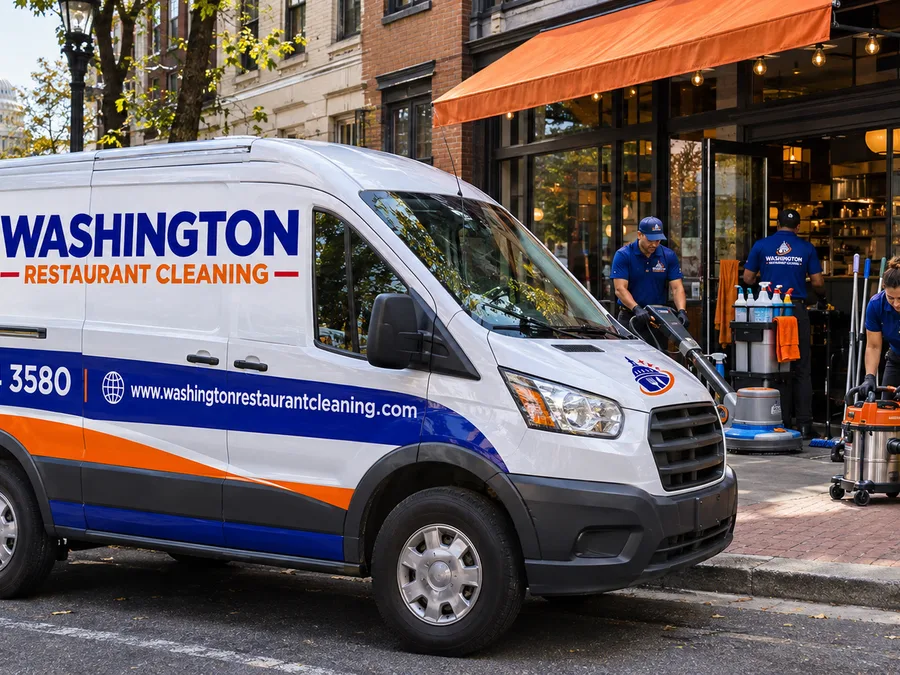
A cleaning crew preparing carts and floor-care equipment outside a Silver Spring restaurant after closing, with food and work areas secured.
Access, deliveries, shared corridors, and operating hours are addressed before work begins.

Montgomery County food-service facilities operate under county food-safety oversight, and cleaning records can help managers show that routine tasks are assigned and completed. A professional cleaning company does not replace the person in charge, employee hygiene, pest control, equipment maintenance, or the restaurant's food-safety procedures. It supports those systems by completing defined cleaning tasks consistently.

Local conditions also affect scheduling. Humid summers can make entry floors and kitchen residue harder to manage, while winter rain, slush, and deicing material increase soil at entrances and along dining-room traffic paths. Downtown Silver Spring properties may also share loading areas, elevators, or waste rooms with other tenants. Access instructions should be settled before the crew arrives.

Frequency depends on cooking volume, menu, hours, floor condition, and the amount of grease produced. High-touch points and heavily used floors may need attention every service day. Equipment surrounds, walls, shelving, and other detail areas are often placed on a rotating schedule. A facility with fryers, charbroilers, or long operating hours will usually need more frequent degreasing than a low-volume café.

Budget planning

How Much Does Restaurant Cleaning Cost in Silver Spring?

Restaurant cleaning in Silver Spring typically ranges from $250 to $750 per visit for routine work, while intensive kitchen or equipment projects may range from $800 to $2,500 or more. These are general, non-binding estimates rather than a quoted price.

Final cost depends on square footage, grease and carbon buildup, equipment quantity, floor type, access, service frequency, and whether work must occur overnight. Moving equipment and cleaning removable parts also add labor. The exact cost is confirmed after a facility walkthrough and written scope.

Request a Callback

A walkthrough can turn a general cleaning request into a clear schedule, defined equipment list, and written scope suited to your restaurant's hours.

Call for a Free Quote

Scope and scheduling

Restaurant Cleaning Silver Spring: Common Questions

How often should a Silver Spring restaurant schedule professional cleaning?

The right frequency is based on cooking volume, operating hours, menu, and the amount of grease produced. Dining floors, restrooms, touchpoints, and active kitchen floors may need daily attention, while equipment surrounds and walls can follow a weekly, monthly, or rotating detail schedule. Montgomery County food-service operators should also keep their own task schedules aligned with facility procedures and food-safety requirements.

Can cleaning take place after the restaurant closes?

Yes, work can be planned for overnight or other off-hours when access and building rules permit it. Downtown Silver Spring restaurants in mixed-use buildings may need advance arrangements for elevators, loading areas, alarms, waste rooms, or parking. The schedule should also leave enough time for surfaces to dry before prep begins.

Does restaurant equipment cleaning include moving appliances?

Movable equipment can be repositioned when it is safe, authorized, and included in the written scope. Staff should identify utility connections, anti-tip restraints, fragile components, and units that require a qualified technician. Cleaners should never pull hard-connected gas or electrical equipment merely to reach soil behind it.

Do we need to remove food before the crew arrives?

Exposed food must be removed, sealed, or protected before cleaning begins in the work area. The agreed preparation checklist should also address utensils, single-service items, removable equipment parts, and open ingredients. This reduces contamination risk and gives the crew access to shelves, prep surfaces, and equipment interiors.

Can you remove old grease and carbon buildup in one visit?

Some heavy buildup can be substantially reduced in one visit, but thick, baked-on deposits may require staged cleaning. Surface condition, coating damage, equipment design, dwell time, and manufacturer restrictions all affect the result. A test area helps determine whether additional passes are safe.

Is hood and exhaust-duct cleaning included?

Routine kitchen cleaning may include accessible exterior surfaces around the cooking line, but internal hood, duct, and fan cleaning is a separate specialist scope. Exhaust systems should be inspected and serviced by properly qualified providers according to the equipment, cooking process, and applicable fire-safety requirements.

What should a Restaurant Equipment Cleaning Silver Spring quote include?

A useful quote should identify each included equipment category, accessible surfaces, removable parts, exclusions, preparation duties, schedule, and completion standard. It should also state whether equipment will be moved and who handles utilities. That detail makes competing proposals easier to compare and limits confusion on service day.

Plan the scope

Plan a Cleaner, Service-Ready Restaurant

Tell Washington Restaurant Cleaning about your facility, equipment, operating hours, and problem areas. We will help define the work and prepare a practical scope before cleaning begins.