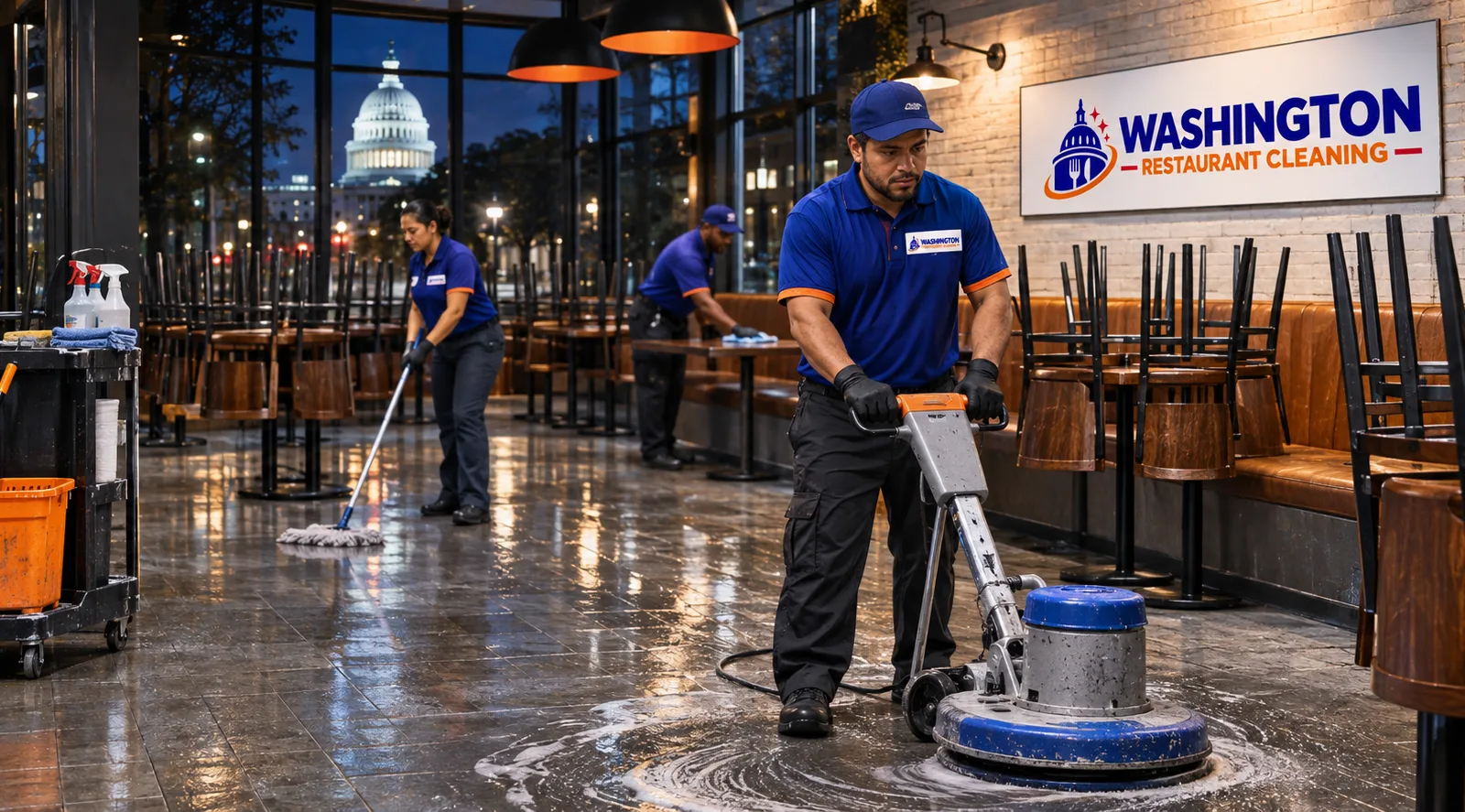
A professional janitorial crew cleaning a Washington, DC restaurant dining room after closing, with chairs raised and floors being serviced.

Night Cleaning · Washington, DC

Restaurant Night Cleaning in Washington, DC

A dependable overnight crew cleans kitchens, dining rooms, service areas, and restrooms after closing so your staff can start the next shift in a prepared space.

✓Dining rooms ✓Kitchen surfaces ✓Restroom cleaning ✓After-closing access

Overnight service planning

Reliable Cleaning After the Last Guest Leaves

Restaurant Night Cleaning should fit around service rather than interrupt it. Washington Restaurant Cleaning develops a written overnight scope based on your operating hours, floor plan, surface materials, equipment layout, and priorities. The crew arrives after the agreed closing window, completes the assigned work, records exceptions, and secures the premises according to your instructions.

Night work gives cleaners access to dining floors, restroom fixtures, service stations, and other areas that are difficult to clean while guests and staff are present. It also gives wet floors time to dry before opening. For each location, Washington's trusted restaurant team builds recurring schedules around the actual demands of food-service spaces instead of relying on a generic office-cleaning checklist.

The service is available for restaurants near late-night activity in Adams Morgan, where closing times can affect crew access, and for Georgetown locations where compact commercial spaces often require careful sequencing. Capitol Hill restaurants may need cleaning coordinated with deliveries and limited curb access. Downtown businesses can also require building access procedures, elevator coordination, or loading instructions. These practical details belong in the service plan before the first shift.

Request a Callback

Nightly cleaning scope

What Overnight Restaurant Cleaning Can Cover

✓

Dining Rooms and Guest Areas

Nightly tasks may include wiping tables and chairs, cleaning ledges and partitions, vacuuming carpet, sweeping and mopping hard floors, spot-cleaning glass, and removing interior trash. Surface-appropriate products help protect wood, stone, tile, resilient flooring, and finished metal.

✓

Kitchen Floors and Washable Surfaces

Crews can remove loose debris, apply the appropriate degreaser, agitate affected areas, and mop or rinse where the facility permits. Work may also include accessible wall areas, splash zones, mats, and the exterior surfaces of equipment named in the scope.

✓

Restaurant Restroom Cleaning

Restroom service includes cleaning and disinfecting toilets, urinals, sinks, faucets, counters, dispensers, mirrors, partitions, and touchpoints. Floors are swept and mopped, waste is removed, and client-supplied paper goods and soap can be replenished.

✓

Bars and Service Stations

The nightly checklist can address accessible counters, sinks, rails, cabinet fronts, shelving, beverage stations, and floors. Staff should remove food, glassware, and personal items before cleaning begins unless another arrangement is documented.

✓

Entry and Closing Details

Door glass, entrance flooring, host stations, interior trash, and selected touchpoints can be handled after guests leave. Closing instructions may cover alarms, keys, approved doors, lights, and where completed waste bags are placed.

✓

Periodic Detail Work

Recurring restaurant cleaning can include scheduled floor scrubbing, edge cleaning, high dusting, baseboard care, and buildup removal. These tasks are assigned by frequency rather than squeezed into every nightly visit.

Request a Callback

Restroom care

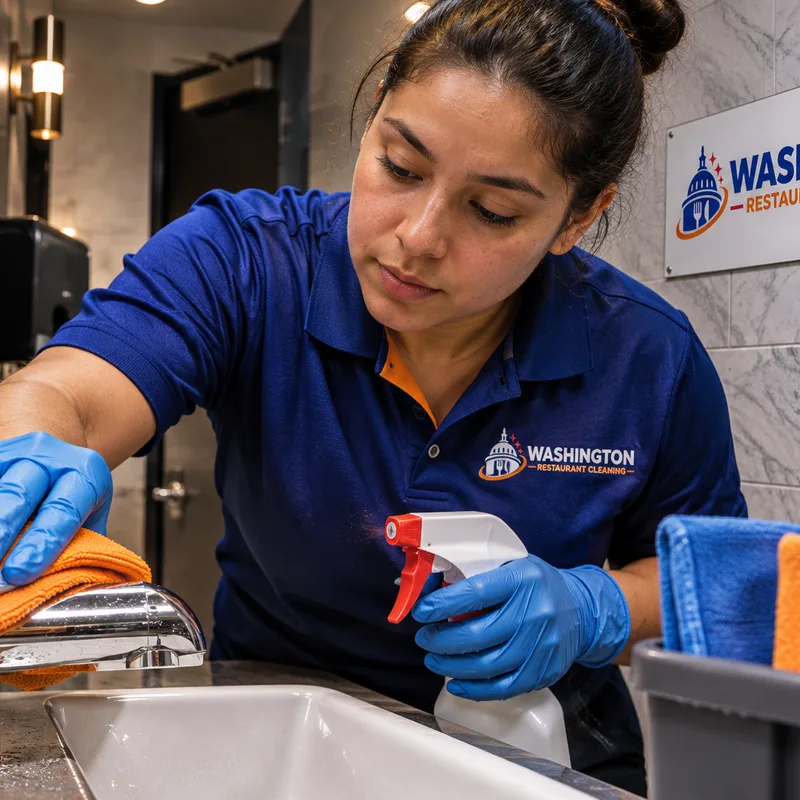
Restaurant Restroom Cleaning That Holds Up Through Service

A cleaner wearing gloves disinfecting fixtures in a well-maintained restaurant restroom after closing, with separate color-coded cleaning cloths visible.
Restroom routines address fixtures, touchpoints, floors, odor sources, and consumable supplies.

Restrooms need more than a quick wipe because they are high-touch guest spaces with recurring moisture, odor, and supply demands. A proper routine works from cleaner surfaces toward more contaminated fixtures, uses fresh cloths or color-coded tools to reduce cross-contact, and observes the product label's required contact time. A disinfectant cannot do its job if it is sprayed and immediately wiped away.

The checklist can cover bowls, seats, flush handles, urinals, partitions, dispensers, faucets, door hardware, counters, mirrors, and floors. Cleaners also report leaking fixtures, damaged dispensers, persistent odors, or exhausted supplies that cannot be corrected through normal cleaning. Restroom tools should remain separate from dining and food-area tools.

Busy dinner service in areas such as the U Street corridor can create concentrated restroom use late in the evening. Nightly attention allows the full room to be serviced after customers leave, including corners and floor edges that are hard to reach during operating hours.

Recurring workflow

How We Set Up Recurring Restaurant Cleaning

  1. Step 1 of 5

    Walk Through the Restaurant

    We review the kitchen, dining room, bar, restrooms, entrances, storage limitations, flooring, and accessible equipment exteriors. We also discuss operating hours, alarm procedures, keys, parking, waste placement, and any building rules.

  2. Step 2 of 5

    Define the Scope and Frequencies

    Each task is assigned a frequency such as nightly, weekly, or periodic. The written scope distinguishes routine janitorial cleaning from specialized work so managers know what the crew will complete on each visit.

  3. Step 3 of 5

    Plan the Overnight Sequence

    The route is arranged around close-down tasks. Cleaners generally remove dry debris before wet cleaning, work from higher surfaces toward floors, and sequence restrooms and kitchen areas to keep tools separated.

  4. Step 4 of 5

    Launch the First Shifts

    Initial visits reveal practical details that may not be obvious during a daytime walkthrough, including late staff departures, locked rooms, movable furniture, and access to water or waste areas. The plan is adjusted when needed.

  5. Step 5 of 5

    Inspect and Communicate

    Supervisory checks and manager feedback help catch missed edges, supply concerns, access problems, or changing traffic patterns. Updates are documented so the nightly crew works from the current instructions.

Request a Callback

Washington operations

Nightly Restaurant Cleaning in Washington Requires a Clear Access Plan

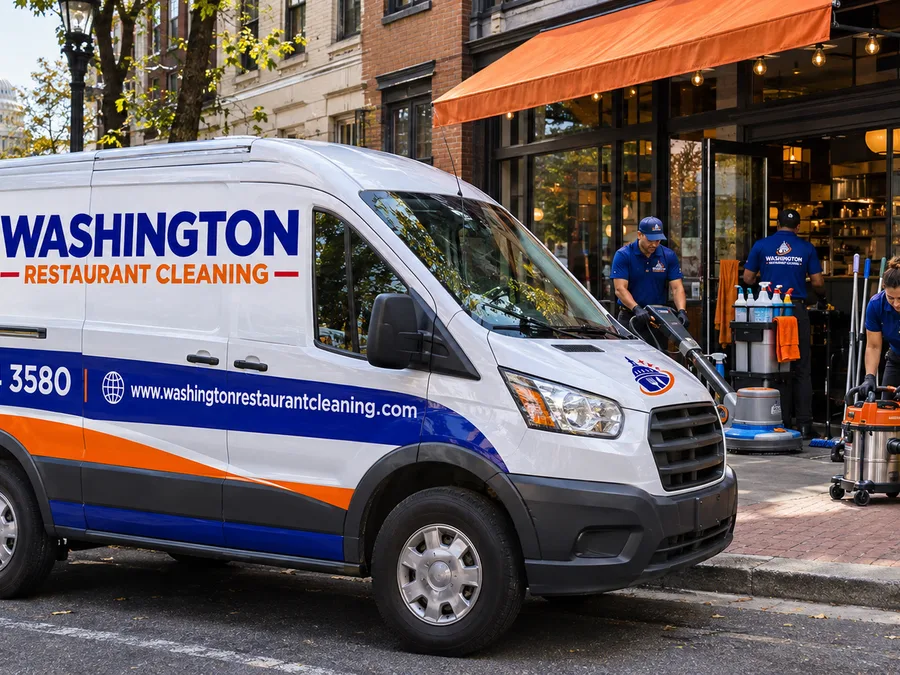
An overnight cleaning crew unloading labeled janitorial supplies at a Washington, DC restaurant entrance after business hours.
Access timing, secure entry, chemical storage, and closing instructions are planned before recurring work starts.

Washington restaurants operate in very different settings. Georgetown has many compact storefronts and busy evening streets, so equipment storage and crew arrival may need close planning. Downtown locations may sit inside managed commercial buildings with security desks, elevators, loading restrictions, or approved access windows. In Adams Morgan and along the U Street corridor, late operating hours can move the cleaning start well past a standard evening shift.

Weather also changes the work. Rain and winter treatment materials can be tracked through entrances, while humid summer conditions make airflow and floor-drying procedures more important. Entry mat care, wet-floor controls, and the correct floor chemistry should be included when those conditions affect the restaurant.

A restaurant janitorial company should also understand boundaries around food operations. Cleaning crews follow the written janitorial scope, while restaurant management remains responsible for its food-safety program, equipment shutdown, food storage, and any tasks reserved for trained kitchen employees. Products are used according to their labels, and Safety Data Sheets should be available for workplace chemicals.

Defined responsibilities

Restaurant Janitorial Cleaning With Defined Boundaries

A useful proposal states what is included, how often each task is performed, and what requires separate approval. Routine restaurant janitorial services in Washington may cover accessible surfaces, floors, restrooms, waste removal, touchpoints, and specified equipment exteriors. Interior hood and duct cleaning, pest control, grease-trap pumping, hazardous cleanup, and equipment disassembly are different scopes that may require specialist providers.

This distinction protects the restaurant and the cleaning crew. For example, wiping an accessible stainless-steel equipment exterior is different from opening machinery or cleaning internal food-contact components. Moving light chairs is different from shifting heavy appliances. Ordinary floor degreasing is different from correcting a drain backup or handling an unknown spill.

Managers should receive a checklist that matches the restaurant rather than a vague promise to clean everything. A good scope identifies exclusions, supply responsibilities, periodic tasks, access requirements, quality checks, and the process for reporting damage or maintenance concerns.
Request a Callback

Budget planning

How Much Does Restaurant Night Cleaning Cost in Washington, DC?

Recurring restaurant night cleaning in Washington typically costs about $0.12 to $0.35 per square foot per visit, while smaller or labor-intensive locations may be priced at roughly $250 to $700 or more per night. These are general planning ranges, not a quote.

Final pricing depends on square footage, visit frequency, kitchen grease levels, restroom count, floor materials, closing time, access, supplies, and periodic detail work. A walkthrough is used to verify conditions and define the nightly checklist before the exact cost is confirmed in writing.

Request a Callback

A walkthrough can turn your closing priorities into a practical nightly checklist, clear service frequencies, and a written scope for your restaurant.

Call for a Free Quote

Scope and scheduling

Questions About Daily Restaurant Cleaning

Can overnight restaurant cleaning begin after a late closing time?

Yes, the cleaning window can begin after staff finish their required close-down work. The agreed start depends on the restaurant's hours, building access, alarm procedures, and the amount of work to complete before reopening. Late-night corridors such as Adams Morgan and U Street often require a start time based on actual staff departure rather than the posted guest closing time.

What affects the price of recurring restaurant cleaning?

Labor time and task frequency have the greatest effect on price. Square footage, grease accumulation, restroom count, floor type, furniture movement, consumable restocking, access restrictions, and requested detail work also matter. A compact Georgetown restaurant can require substantial labor if storage and movement are constrained, so area alone does not determine the quote.

Does Restaurant Restroom Cleaning include restocking supplies?

Yes, client-supplied soap, toilet tissue, paper towels, and liners can be replenished when restocking is included in the scope. The crew can report low inventory or damaged dispensers, but purchasing responsibilities should be established before service starts. Restroom tools are kept separate from those used in dining and food-service areas.

Can the crew clean while kitchen employees are still closing?

Yes, limited overlap is possible when responsibilities and work zones are clearly separated. Kitchen staff should finish food handling and equipment shutdown in an area before janitorial work begins there. A defined sequence reduces interference and keeps wet floors, chemicals, carts, and hoses away from active food preparation.

Are kitchen hoods, ducts, and grease traps part of nightly janitorial service?

No, internal hood and duct cleaning and grease-trap pumping are normally specialist services rather than routine nightly janitorial tasks. The recurring scope can include named accessible equipment exteriors, surrounding washable surfaces, and kitchen floors. Any specialized grease-system work should be separately defined and scheduled.

How quickly can daily restaurant cleaning start?

The start date depends on the walkthrough, scope approval, staffing, access arrangements, and any required keys or building credentials. Downtown Washington properties may require coordination with building management or security before an overnight crew can enter. Once those details are settled, the first shifts can be scheduled around the restaurant's closing routine.

Can the cleaning checklist change when the restaurant gets busier?

Yes, the checklist and frequencies can be adjusted when traffic, operating hours, menus, floor use, or seasonal conditions change. Rainy periods may increase entrance and floor care, while a longer service schedule may require added restroom attention. Scope changes should be documented so the crew and restaurant manager share the same expectations.

Plan the nightly scope

Plan a Cleaner Start to Every Service Day

Tell Washington Restaurant Cleaning about your hours, layout, current trouble spots, and access requirements. We will discuss a recurring overnight scope built around the way your restaurant actually closes and reopens.